On-Site Fan & Blower Balancing
On-Site Rotating Equipment Balancing
Did you know over 50% of rotating equipment failures are directly related to Unbalance and
misalignment
? Unbalanced or misaligned equipment are subjected to higher vibration levels significantly reducing the service life of bearings, seals, shafts and couplings.
Electromechanex can help reduce overall operating costs and increase equipment efficiency,
reliability and productivity with our Precision Balancing and expert Laser Shaft Alignment service.
Our Field Service personnel are OSHA/MSHA trained for safe work practices. Call us for a free consult.
At some time during a motor’s life, it is likely to experience high vibration levels. What’s behind this maintenance phenomenon? The cause may be an electromagnetic or mechanical imbalance, loose components, rubbing parts, bearing failure, resonance, or shaft to shaft misalignment.
Unbalanced equipment is subjected to higher vibration levels significantly reducing the service life of bearings, seals, shafts and couplings.
When a problem occurs, it is critical to quickly
identify the source and take corrective action. Using EMX’ vibration-analysis latest diagnostic techniques can save you money and downtime. EMX’ vibration-analysis systems is a portable, route-based instrument used for collecting vibration data on rotating machinery. It reduces collection time, analysis, and reporting time, when compared with similar devices. This allows EMX to determine the severity of the stress level of bearing or gear wear on your motor.
The data is recorded from each machine and uploaded on the software, providing quick recognition of change in the vibration pattern, as an indicator of deterioration. Corrective actions of any kind of machine misalignment are then taken.
Fan & Blower Balancing
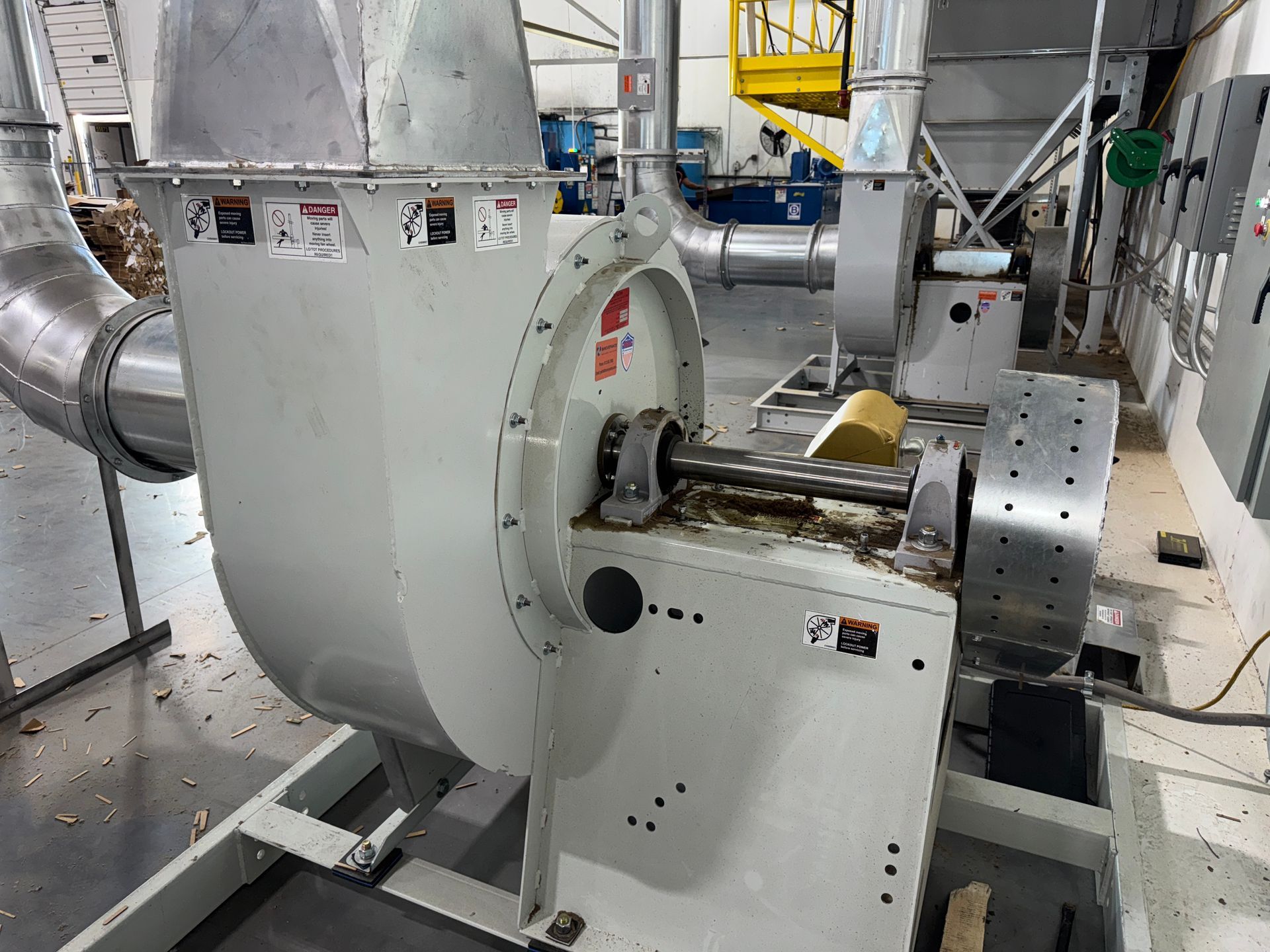
We offer complete maintenance, troubleshooting, and repair services on most types of industrial fans. We have the knowledge and experience required to troubleshoot and correct all fan problems. We work with fan manufacturers and reps when necessary to provide innovative solutions and quick response to the needs of customers in a wide array of industries.
All fans require regular maintenance to give optimal and dependable service. Proper lubrication and periodic inspection will increase the reliability of your fan and is especially important if a failure can shut down your operation.
EMX Industrial Repair’s state of the art Field Balancing Systems are designed to perform measurements of vibrations and calculations within the existing assembly. This allows machinery to be left in place, on-site, at your facility, which reduces overall downtime and associated labor costs, and at times may improve balancing accuracy, as the rotating component is spun on it’s originally designed axis and bearing housings. Some examples of machinery balanced in-place, are typically Fans, Blowers and Turbines, because of the designed rotor access enables the ability to add or remove weights to rotating element. The balancing application measures the running speed (1X) filtered vibration amplitude and relative phase with a reference mark in the rotor to allow full balancing correction. All Balancing results will be performed to the level specified by the customer. In the absence of a requested level, dynamic balancing to balance quality grade G2.5 (ISO 1940/1) should enable the machine to meet final vibration limits. A Balance weight or weights are secured to rotor and will be located so that they do not interfere with other machine components. Good documentation is important in balancing. It is a record of who performed the balancing, when it was done and how well it was done. All work is electronically documented and a machine balancing report, with balancing data, as well as original and final results is generated upon completion of job.
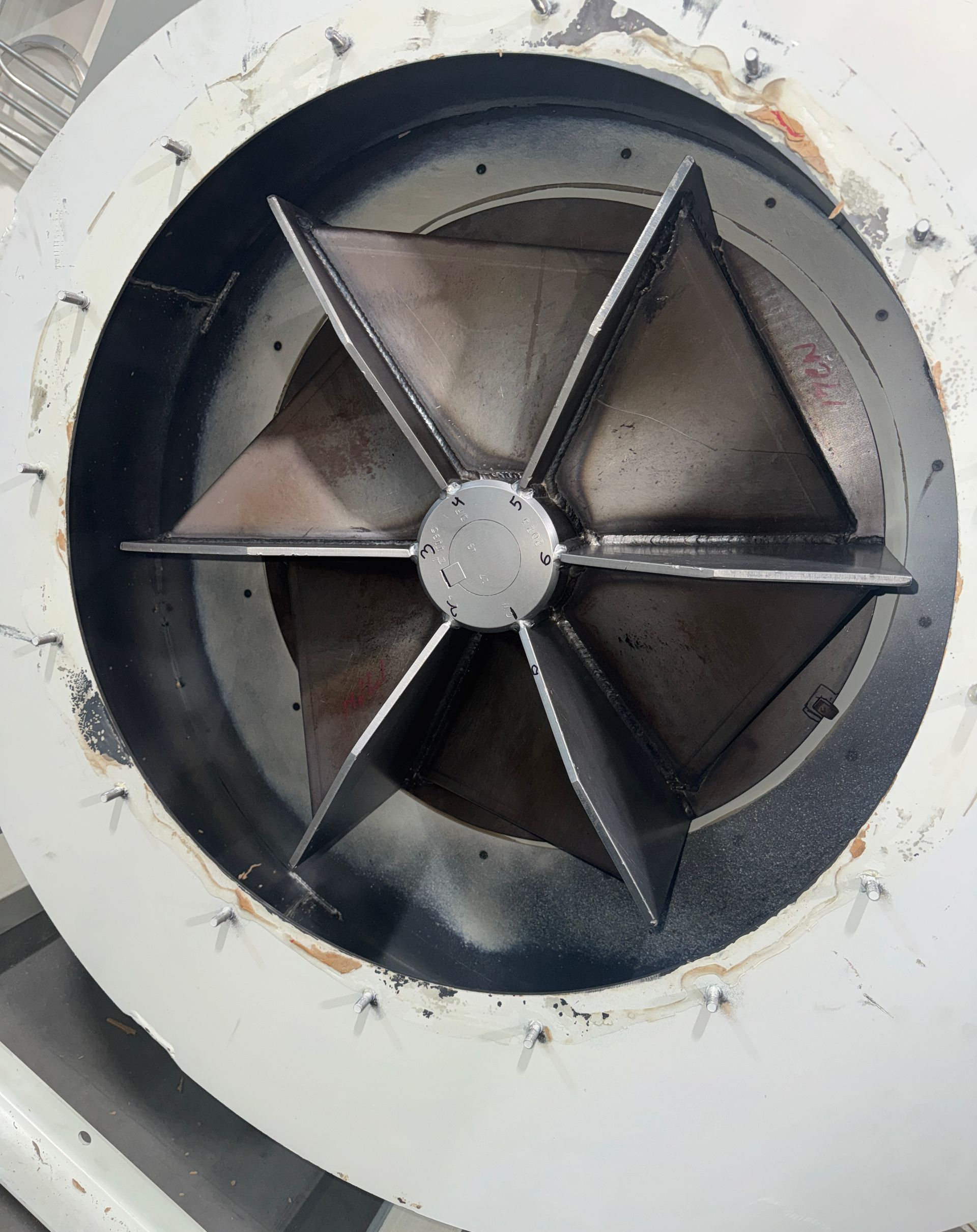
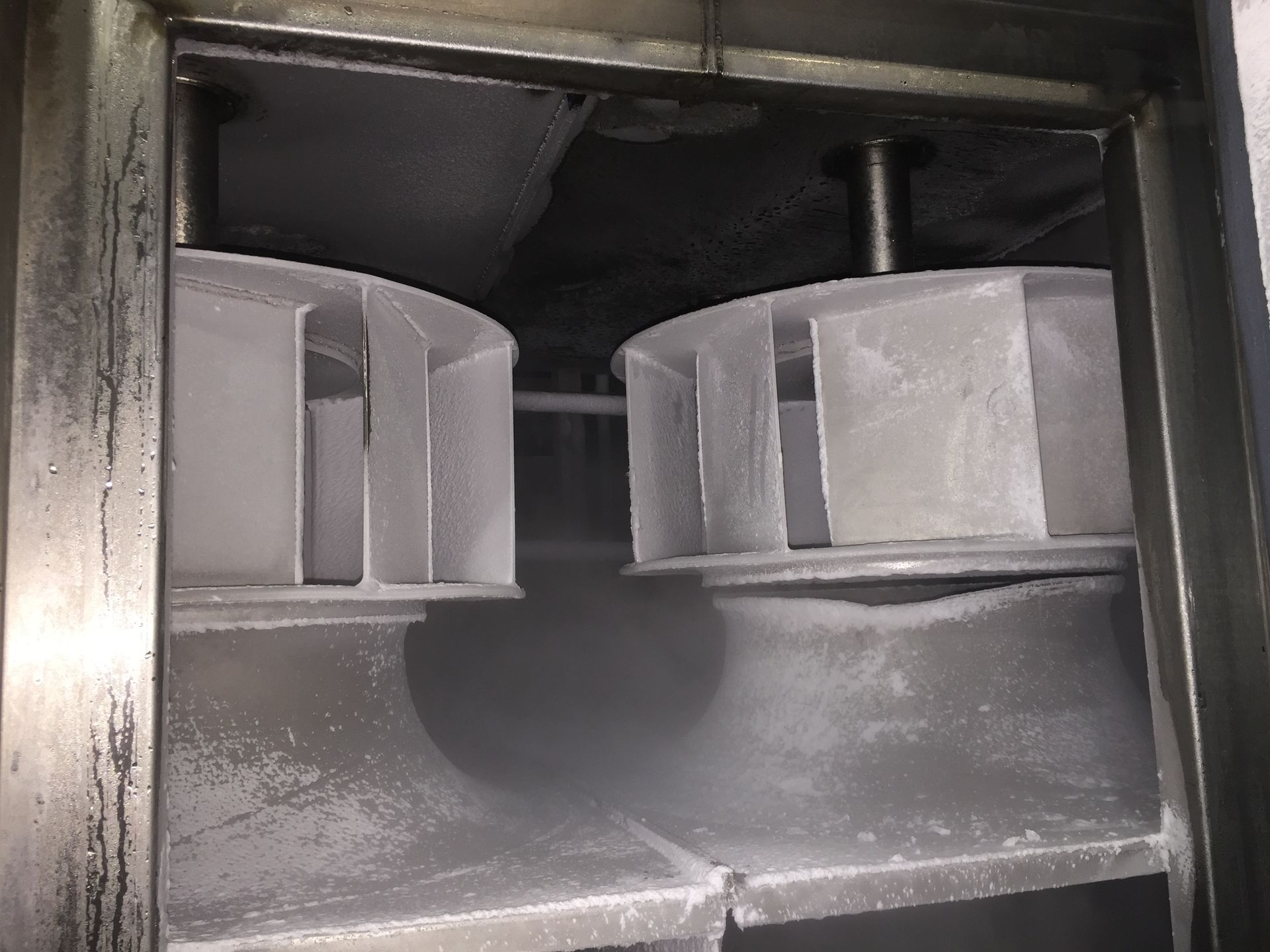
Many times we have seen bearings replaced when the fan becomes noisy – only to find the problem still exists. This is because the problem was not with the bearings themselves, the fan was shaking and noisy because of imbalance. We have the ability to identified and corrected the vibration source and balance the fan blade to OEM specifications. Sometimes the bearings fail because of unbalance and will only fail again prematurely if this condition is not corrected. The noise you hear may be an out of balance condition which can be corrected before damage occurs.
EMX Electro-Mechanical service team has the ability to help you with the reconditioning, repairing, and rebuilding of industrial fans and blowers, including:
- Axial
- Centrifugal
- Squirrel Cage
- Single and Multi-stage blowers
- Air-Handlers (HVAC)
- Cooling Towers
- Induced Draft-ID Fans
- Exhaust
- Positive Displacement Blowers
- Tube axial
- Dust Collection
- Ventilator Fans
Dynamic balancing is when the rotation does not produce any resultant centrifugal force or couple. The system will rotate without needing the application of any external force or couple, other than that required to support its weight. When a system or machine is unbalanced, to avoid stress being put upon the bearings, a counterbalancing weight is added. Dynamic balancing is a way to balance out machines by rotating parts quickly and then measuring the imbalance using electronic equipment. The imbalance calculated can then be added or subtracted from the weight until the vibration of the parts is reduced.
8 Benefits of Dynamic Balancing Exercises
Bearing life: Balancing the machine can extend the bearing life as it is affected most by unbalance.
Low vibration: One of the greatest sources of vibration is unbalance
Low noise: Mechanical vibration is also one of the leading causes of airborne noise.
Operator fatigue: The exposure to high levels of noise and vibration can affect the efficiency of the operator.
Operator safety: Machine failure is less likely to occur, personal safety is increased.
Operating cost: Many facilities will keep extra machines on hand in case a breakdown occurs. Because machines operate longer and with fewer problems, you can keep fewer machines on hand.
Structural stress: Due to the fact that vibration associated with unbalance is absorbed by the surrounding structure, having a machine operating in balance will reduce structural stress
Productivity: Well balanced electric motors are less prone to failure, which means that there is less unplanned downtime in your shop. Unplanned downtime causes production delays that result from removing damaged equipment for repair, purchasing/pulling another motor from storage and getting the replacement motor up and running. Well balanced motors also last longer and do not require repair as often as unbalanced motors.
Dynamic Balancing
EMX Electro-Mechanical’s state of the art Balancing Systems are designed to perform measurements of vibrations and calculations within horizontal shop balancing machines as well as, in the field. The application measures the running speed (1X) filtered vibration amplitude and relative phase with a reference mark in the rotor to allow full balancing correction. All Dynamic Balancing results will be performed to the level specified by the customer. In the absence of a requested level, dynamic balancing to balance quality grade G2.5 (ISO 1940/1) should enable the machine to meet final vibration limits. A Balance weight or weights are secured to rotor and will be located so that they do not interfere with other machine components.
Why Balance?
Rotating components experience significant quality and performance improvements when balanced. Balancing is the process of aligning a principal inertia axis with the geometric axis of rotation through the addition or removal of material. By doing so, the centrifugal forces are reduced, minimizing vibration, noise and associated wear. Virtually all rotating components experience significant improvements when balanced. Balancing can contribute to more efficient, more powerful,quieter, smoother running and longer lasting equipment and is one of the most cost effective means of providing value to our customer.
Think of imbalance as an imaginary heavy spot on a rotating shaft. This heavy spot is pulling the shaft and the center of rotation of the center line off the shaft on every rotation. The force of the imbalance is transferred to the bearing and case of the machine causing heat, friction, lubrication failure, and bearing faults. Extreme imbalance can cause looseness in the machine train. There are many reasons for imbalance to be present in a rotor. Deposit and build-up causes imbalance as deposits of dirt and grime build up on a rotor and its parts over time. The build-up of these deposits may be gradual, but not necessarily equal and can cause an imbalance condition. While the build-up may be gradual, the deposits will break away at an uneven rate causing a more serious imbalance. This can be especially true of fan blades. Fan blades will tend to collect deposits in a linear fashion, but the deposits will not come off at the same rate. They will come off in unequal pieces causing serious imbalance. Make cleaning of rotor, rotating parts and fan blades a regular part of your scheduled inspection and preventative maintenance. Rotors can also be damaged when exposed to abrasive or corrosive materials. This will cause uneven wear and an imbalance condition. When you choose products, make sure their rotors are made from materials that can withstand corrosion and abrasion over long periods of time. Eccentricity exists when the true or geometric centerline of a part does not coincide with its rotating center. This can be a manufacturing defect. Eccentricity can also be caused by out of roundness of the shaft, variations in electrical properties or uneven heating.
Documentation & Certification
Good documentation is important in alignment. It is a record of who performed the alignment, when it was done and how well it was done. All work is electronically documented and a shaft alignment report with alignment data as well as original and final results, is generated upon completion of the job. The commitment for alignment is to do it every time a machine is installed and make it a regular preventative maintenance step when machines are inspected. A quick alignment measurement can save a lot of headaches down the road.
Precision Laser Alignment initially establishes the alignment conditions of newly installed components of new projects. This gives the original misalignment readings.
Precision Laser Alignment procedures are then used to make precise installation adjustments on the new equipment mentioned above. In some instances, precision alignment is not achievable. If this is the case, notice is given to the end user. Additional millwright work may be required.
After the adjustments are completed on the new equipment, final recorded results will be provided. This includes horizontal and vertical cad style drawings.
Vibration Analysis is then used to establish baselines for the vertical, horizontal and axial in a detailed report. These readings confirm the Laser Alignment Precision Installation of the new equipment and overall expected increased reliability of the equipment. This process assures the client an unbiased opinion of conditions and that any necessary adjustments have been made.
These three steps lead to Certified Precision Installations using industry standards for new equipment.